Guides
Saddle Pad Basics: Shape, Fit, and Everyday Care
Aug
A saddle pad helps keep the saddle area clean and can support everyday comfort, but it should never be used to disguise a saddle-fit problem. Start with the saddle and the horse, then choose a pad that works with both.
Match the shape to the saddle
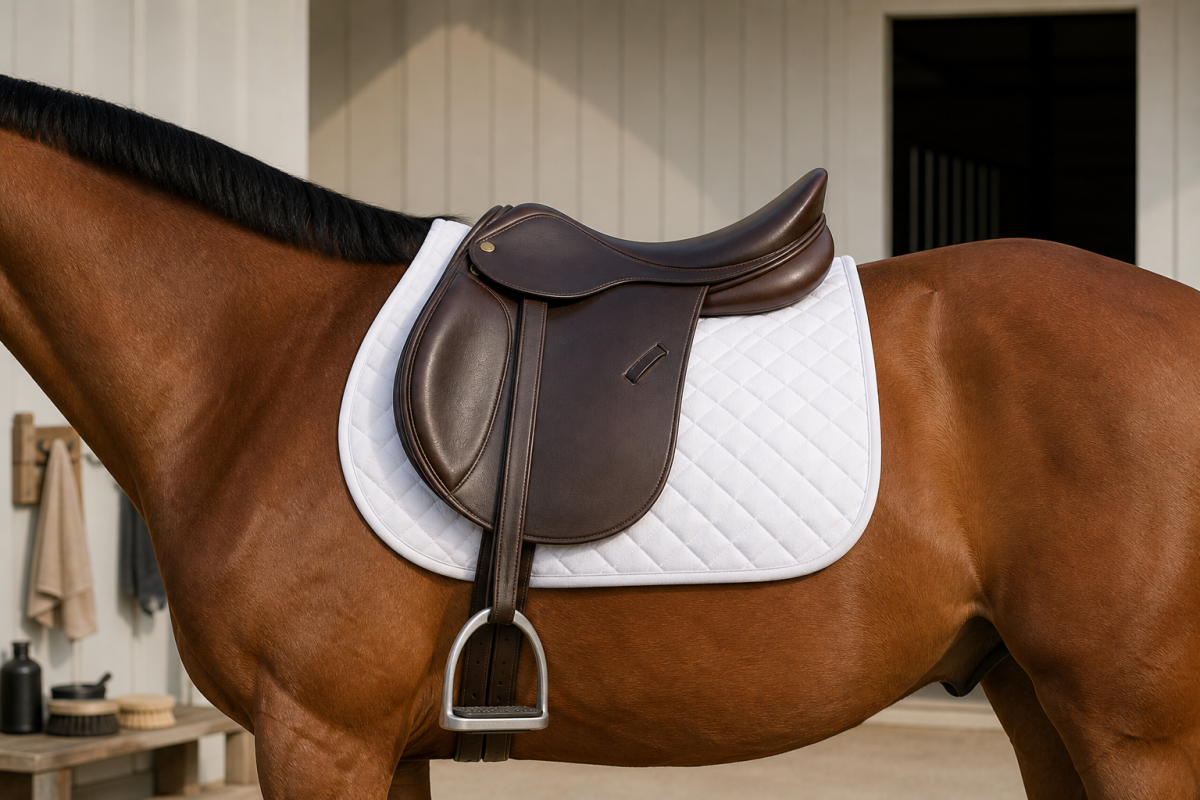
Dressage, close-contact, all-purpose, and western pads are shaped differently. The pad should extend beyond the saddle edges without creating unnecessary bulk. Contoured or shaped toplines can help the pad follow the horse’s back.
Check clearance and placement
Place the pad evenly and lift it gently into the saddle channel before tightening the girth. Check that the pad is not pulled tightly over the withers and that seams, bindings, or logos are not positioned where they may rub.
Consider thickness carefully
More padding is not always better. Extra thickness can change how a saddle sits. Corrective pads, shims, and specialised materials should be selected with suitable saddle-fitting guidance when they are intended to alter balance or pressure.
Choose materials for the work
Breathable, moisture-managing materials are practical for regular schooling. Durability and washability matter when the pad is used frequently. Some horses are sensitive to particular fabrics or accumulated detergent, so monitor the skin and coat after use.
Keep pads clean and inspect them
Brush away hair and dirt after riding and wash according to the care label. Make sure the pad is fully dry before storage. Replace pads when the filling becomes uneven, the shape is distorted, or worn areas could create friction.
If a horse shows soreness, persistent rubbing, or a change in performance, consult an appropriate equine professional rather than relying on a different pad alone.
